Summary
Help fellow amputees by taking part in clinical trials.
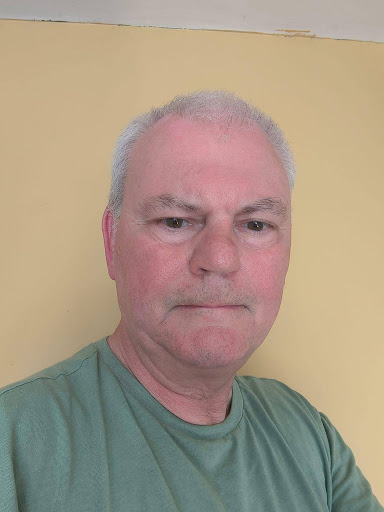
In this celebration of Volunteers’ Week, we wanted to share information sent to us by one of our LA Volunteers about a clinical trial he was involved in. We’ll hand this blog over to David, who will tell you more!
“I decided to join the LA about three years ago. After I retired, I wanted to leave behind the day-to-day battles that being an amputee can sometimes involve and try to support others in the same position.
The LA offered me a perfect opportunity to start to do just that in the form of the Volunteer Visitor Programme, and then I started to look for other opportunities to see what more I could do.
I spotted a poster asking for volunteers for a clinical trial being run by the University of Birmingham in conjunction with the NHS Rehabilitation Centre I attend at Selly Oak in Birmingham.
I signed up and have now completed the trial; it was great to take part in this trial to help other limb loss sufferers and to promote the LA.
The programme was run by the Department of Mechanical Engineering at the University of Birmingham. Its purpose was to test whether using electric shocks to stimulate the muscles was an effective way to help rehabilitate amputees. Functional Electrical Stimulation (FES) is currently used to treat stroke victims for dropped foot, and the purpose of the trial was to find out if this form of treatment could be used to help with amputee rehabilitation and see if it would reduce phantom pain.
The programme was open to below-knee amputees under 70 years old who could walk without the use of walking aids for 100m. Over a period of 22 weeks, each test subject was required to attend a total of 7 in-person appointments, two at the university and five at the rehab centre and a total of 10 short telephone appointments.
The in-person appointments involved having sensors attached to various parts of the body and then walking up and down a five-metre distance, as well as a brief questionnaire about pain levels.
The telephone appointments were to collect data and feedback on the subject’s general health and collect data and feedback on the use of the FES device.
The actual use of the FES device itself lasted for five weeks and involved wearing two electrodes on my thigh attached to an electrical stimulator that was triggered by a sensor attached to the bottom of my prosthetic foot. I could turn the device on and off at will, and I could adjust the strength of the electrical pulse to prevent discomfort.
So, what happened?
I found the device easy to use, and I definitely noticed its effect on my quadriceps muscle. It didn’t really seem to have much impact on my residual limb discomfort, but I heard from at least one other participant that it had helped them. I found taking part in the trial both easy to do and interesting.
The people running the trial were of the opinion that it had been a success and that it was likely that FES would potentially be an effective, cheap, non-invasive, drug-free treatment option for people rehabilitating post-amputation.
Overall, I found the trial to be an enjoyable experience. I was a little apprehensive at first, and the programme did involve some travel. The hardest part was remembering to turn the device on when walking, and the weekly step count was a timely reminder of how lazy I sometimes am!
All of the people involved in the programme were both kind and considerate and keen to make everything as easy for me as they could. As a bonus incentive, my successful participation was rewarded with a £250 Amazon voucher too!
I would really recommend taking part in any programmes like this to other LA members as a great way to do something to help other amputees, promote the LA and be better informed about new developments in ways to help make the lives of amputees better.”
More information about the MoFit study: https://rdn.nihr.ac.uk/news/electrical-stimulation-used-amputee-study
Results of the MoFit research can be found here: https://ieeexplore.ieee.org/document/11419837